Key Takeaways
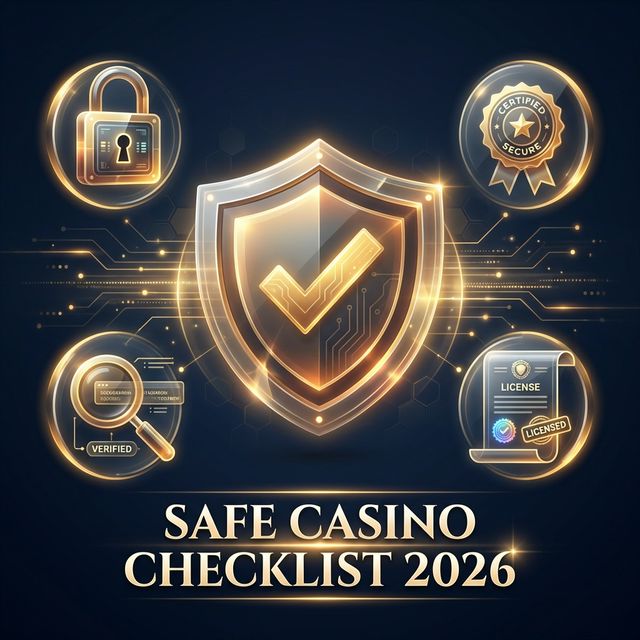
- A valid gambling license from a recognized regulator (MGA, UKGC, Gibraltar, Curacao) is the single most important indicator of casino legitimacy.
- SSL encryption (the padlock icon and 'https://' in the address bar) is a baseline requirement — any casino without it should be avoided immediately.
- Independent RNG audit certifications from bodies like eCOGRA, iTech Labs, or GLI confirm that game outcomes are genuinely random and not manipulated.
- Red flags include missing or unverifiable licenses, delayed withdrawals exceeding 72 hours, vague terms and conditions, and absence of responsible gambling tools.
- A legitimate casino will always welcome scrutiny — if a site makes it difficult to find licensing, security, or audit information, that is your answer.
The License Check: Your First Line of Defense
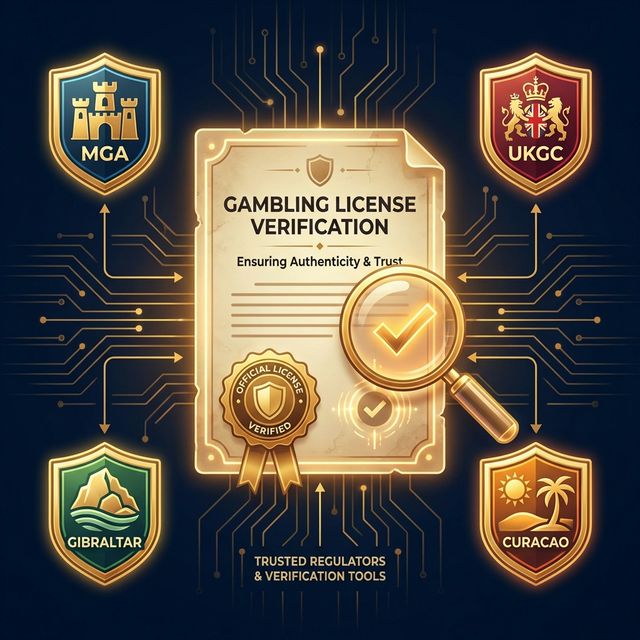
Every legitimate online casino operates under a gambling license issued by a government regulatory body. This license is not a formality — it represents a legal framework that governs how the casino handles your money, resolves disputes, ensures game fairness, and protects your personal data. Without it, you have zero recourse if something goes wrong.
The four most recognized licensing jurisdictions in 2026 are the Malta Gaming Authority (MGA), the UK Gambling Commission (UKGC), the Gibraltar Regulatory Authority, and the Curacao eGaming Authority. Each operates at different levels of strictness: the UKGC and MGA impose the most rigorous requirements including mandatory segregation of player funds, regular financial audits, and strict advertising standards. Curacao licenses are easier to obtain and carry fewer ongoing obligations, making them common among newer casinos — but also among less scrupulous operators.
Here is how to verify a license in under 30 seconds: scroll to the footer of the casino website and look for the regulator's logo and a license number. Then — and this is the critical step most players skip — visit the regulator's official website and search their public register for that license number. The MGA maintains a searchable database at mga.org.mt, the UKGC at gamblingcommission.gov.uk, and Gibraltar at gibraltar.gov.gi. If the license number does not appear in the regulator's database, or if the casino displays a logo without any verifiable number, treat it as a major red flag regardless of how professional the site looks.
Every casino we review at CasinoLogin.gg has been verified through this exact process. Our reviewed casinos — including Neospin, 1Red, Gunsbet, and Spinch — all hold verifiable licenses that can be cross-referenced with their respective regulators' public databases.
Security Signals You Can See in 30 Seconds
Beyond licensing, a safe online casino implements multiple layers of technical security to protect your financial transactions and personal information. The good news is that most of these signals are visible without any technical expertise.
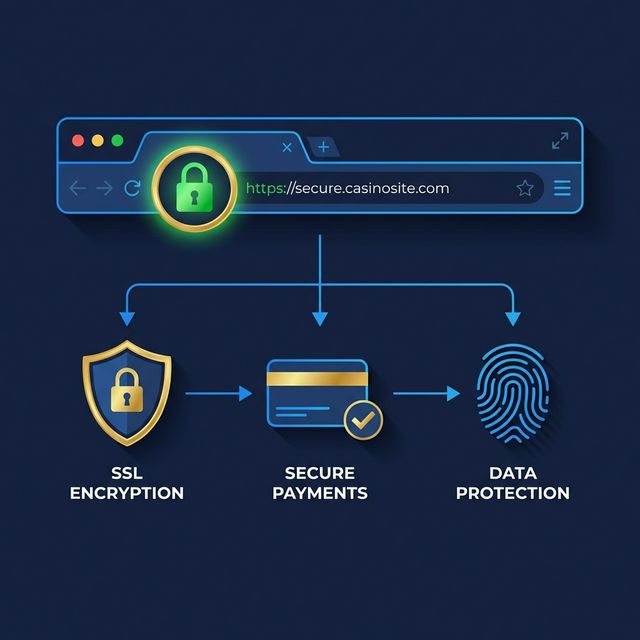
The first and most obvious check is SSL encryption. Look at the address bar: a legitimate casino will always show 'https://' (not 'http://') and a padlock icon. This indicates that all data transmitted between your browser and the casino's servers is encrypted using TLS (Transport Layer Security), the same standard used by banks and e-commerce platforms. Clicking the padlock reveals the SSL certificate details — legitimate casinos use certificates from recognized authorities like DigiCert, Comodo, or Let's Encrypt. Any casino operating without SSL encryption in 2026 is either incompetent or deliberately negligent, and neither possibility is acceptable when your money is involved.
The second signal is payment method diversity. Safe casinos partner with established payment processors — Visa, Mastercard, Skrill, Neteller, bank transfers, and increasingly, regulated cryptocurrency gateways. These payment providers conduct their own due diligence before partnering with a casino, creating an additional layer of verification. If a casino only accepts cryptocurrency or obscure payment methods with no traditional banking options, proceed with extreme caution.
The third signal is KYC (Know Your Customer) verification. While requiring identity documents before withdrawal can feel intrusive, it is actually a positive indicator. KYC compliance is mandated by anti-money laundering regulations and demonstrates that the casino operates within a legal framework. Casinos that advertise 'no verification needed' may be avoiding regulatory obligations — which means they may also avoid their obligation to pay you.
Finally, check the privacy policy. A legitimate casino will have a detailed, accessible privacy policy explaining exactly how your data is collected, stored, processed, and shared. If the privacy policy is missing, consists of generic placeholder text, or is hidden behind multiple clicks, the casino is not treating your data security seriously.
Fair Play Proof: RNG Audits and Testing Certifications
A casino can be licensed, encrypted, and beautifully designed — but if the games are rigged, none of that matters. This is where independent testing certifications become critical. They verify that the Random Number Generator (RNG) powering every slot spin, card deal, and roulette wheel is genuinely random and has not been tampered with.
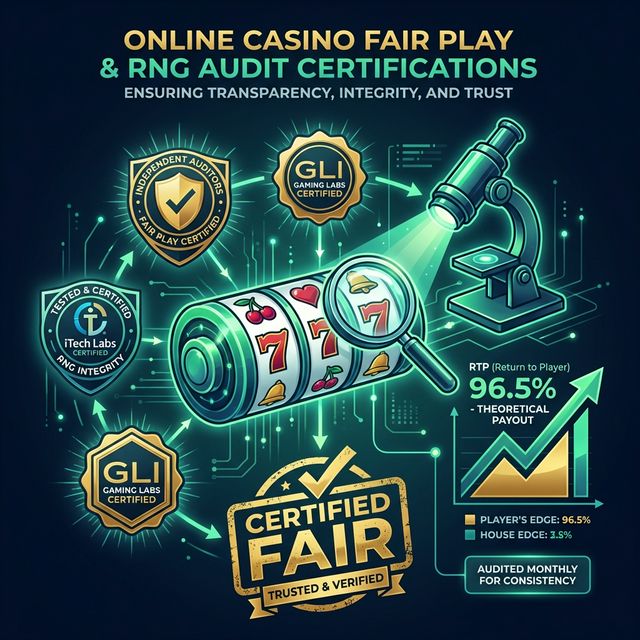
The three most respected testing laboratories in the iGaming industry are eCOGRA (eCommerce Online Gaming Regulation and Assurance), iTech Labs, and GLI (Gaming Laboratories International). These organizations conduct rigorous mathematical analysis of game outcomes over millions of simulated rounds to verify that: results are statistically random, the published RTP (Return to Player) percentages are accurate, and the games have not been modified to reduce payouts below advertised rates.
When a casino displays an eCOGRA, iTech Labs, or GLI certification seal, it means their games have been independently audited and found to meet international fairness standards. These certifications are not self-awarded — they require ongoing compliance, with regular re-testing to maintain the seal. You can verify these certifications directly: eCOGRA publishes monthly payout reports for certified casinos at ecogra.org, and GLI maintains a directory of certified operators.
What does this mean in practice? When you play a slot with a stated 96.5% RTP at an eCOGRA-certified casino, you can trust that the game genuinely returns approximately 96.5% of wagered money over time. At an unaudited casino, that 96.5% displayed on the paytable could be a fabrication — with the actual RTP set to 85% or lower, something you would never be able to detect from gameplay alone.
All casinos reviewed on CasinoLogin.gg use game providers whose software is independently tested by at least one of these three bodies. Providers like Pragmatic Play, BGaming, Play'n GO, and NetEnt submit their entire game libraries to regular third-party audits — and we verify this before including any casino in our reviews.
Red Flags That Scream 'Stay Away'
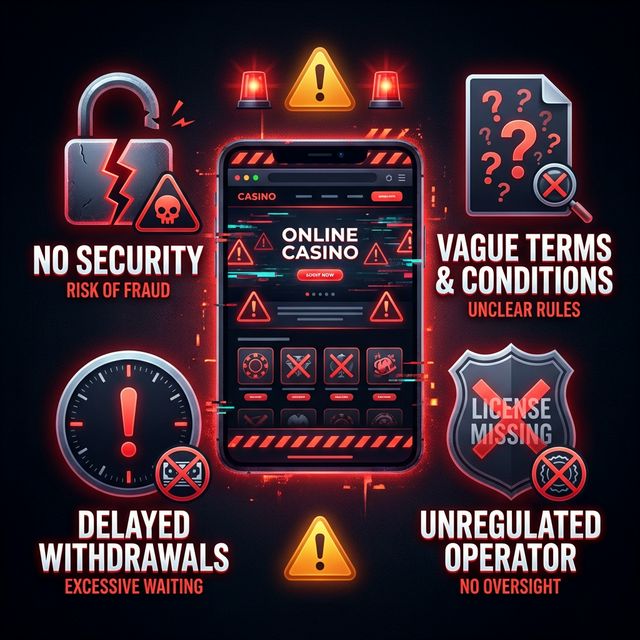
Knowing what to look for is only half the equation. Equally important is knowing what should trigger an immediate exit. Here are the most common red flags that indicate an online casino is unsafe, unregulated, or operating in bad faith.
No verifiable license. This is the single biggest red flag. If a casino does not display a license number, displays a license from a jurisdiction you cannot verify, or shows a regulator's logo without an accompanying license number, do not deposit money. Period. Some rogue casinos have been caught displaying fake MGA or UKGC logos — which is precisely why you must always cross-reference with the regulator's official database rather than trusting what the casino shows you.
Delayed or refused withdrawals. A legitimate casino processes withdrawals within 24 to 72 hours. If player forums, review sites, or complaint databases show a pattern of withdrawals taking weeks, being cancelled without explanation, or requiring escalating verification demands each time a player tries to cash out, the casino is likely operating a 'slow pay' or 'no pay' scheme designed to frustrate players into wagering back their winnings.
Vague or predatory terms and conditions. Every casino has terms and conditions — that is normal. What is not normal is terms that are deliberately confusing, frequently changed without notice, contain maximum cashout caps hidden in complex legal language, or include clauses that allow the casino to void winnings for vague 'security' reasons. If you cannot understand the bonus terms after reading them twice, the casino designed them that way.
Absence of responsible gambling tools. Regulated casinos are required to offer deposit limits, loss limits, session time reminders, cooling-off periods, and self-exclusion options. If a casino has no visible responsible gambling section, no links to problem gambling organizations (like GamCare, BeGambleAware, or Gamblers Anonymous), and no mechanism for self-exclusion, it is operating outside regulatory requirements — which means it is likely operating outside the law.
Aggressive bonus pressure with no opt-out. Safe casinos allow you to decline bonuses or play without promotional offers. Casinos that automatically attach bonuses to every deposit, make it difficult to play without bonus conditions, or use high-pressure pop-ups to push offers are prioritizing wagering volume over player experience — a practice that regulated jurisdictions are increasingly prohibiting.
The 60-Second Casino Safety Check
You do not need to be a cybersecurity expert or a regulatory lawyer to assess an online casino. Here is a practical checklist you can complete in under 60 seconds before making any deposit.
Step 1 — Check the URL. Does it start with 'https://'? Is there a padlock icon? If not, leave immediately.
Step 2 — Scroll to the footer. Look for a gambling license number and the name of the issuing regulator (MGA, UKGC, Gibraltar, Curacao, or a recognized state gaming commission). If nothing is there, leave.
Step 3 — Verify the license. Open the regulator's website in a new tab and search their public register for the license number. If it does not match, leave.
Step 4 — Look for audit seals. Check the footer or 'About' page for eCOGRA, iTech Labs, or GLI certification logos. Click them — legitimate seals link to the auditor's verification page.
Step 5 — Check payment options. Does the casino offer at least two recognized payment methods (Visa, Mastercard, Skrill, Neteller, bank transfer)? If it only accepts cryptocurrency or obscure e-wallets, proceed with caution.
Step 6 — Find the responsible gambling page. Look for deposit limit tools, self-exclusion options, and links to GamCare or BeGambleAware. If these are missing, the casino is not meeting basic regulatory standards.
Step 7 — Read three reviews. Search '[casino name] reviews' and scan player feedback on at least two independent sites. Look for patterns, not individual complaints — every casino has unhappy customers, but consistent reports of withdrawal problems or account closures are systemic issues.
If a casino passes all seven steps, it meets the baseline standards for safe online gambling. If it fails even one, you should seriously reconsider depositing your money there. Every casino listed on CasinoLogin.gg has been subjected to this exact verification process — and we re-check quarterly to ensure ongoing compliance.
Conclusion
The most expensive mistake in online gambling is not a bad bet — it is playing at a bad casino. A rigged game, a frozen withdrawal, or a data breach can cost you far more than any losing streak ever will. The tools to protect yourself are simple, free, and take less than a minute to use. Check the license. Verify the encryption. Look for audit certifications. Read the terms. And if anything feels wrong, trust that instinct — there are thousands of legitimate casinos competing for your business, and not one of them is worth the risk of playing at an unsafe operator. In 2026, the informed player is the protected player.
Primary sources
Sources checked September 8, 2026. Regulatory guidance cited here applies to its stated jurisdiction.